NAΦΘALYN/DEATH BY A THOUSAND CUTS SPLIT RELEASE!

•October 21, 2009 • Leave a Comment


NAΦΘALYN‘S DEBUT SPLIT RELEASE WITH DEATH BY A THOUSAND CUTS ON INSULT RECORDINGS OUT NOW! EACH ARTIST CONTRIBUTES WITH A HELL OF A TRACK, COMMUNICATE VIA INSULT RECORDINGS TO GET YOUR COPY OUT OF 50 HAND-NUMBERED COPIES. WE APPRECIATE YOUR SUPPORT & YOUR TIME. THANK YOU.

Kongh – Shadows of the Shapeless

•August 30, 2009 • Leave a Comment

Kongh – Shadows of the Shapeless (Trust No One Recordings)

kongh

Realising what a band can achieve in such a brief period, I was more than anxious for the new effort of Sweden-based band Kongh. As their appearance in last year’s Roadburn Festival blew my mind off, and the first samples in their myspace page sounded like heaven in my mind, my eagerness was growing, especially when I noticed a black metal approach in some points. Fuck yeah.

The whole thing begins with the ideal “Unholy Water”, a great take-off for an amazing album. The riff prepares the listener for something that holds you pinned to your soundsystem, which is more than satisfactory. And it keeps going like that – these guys sure can make you headbang without great effort. Thanks to (but not limited in) the beautiful changes that hold each of the tracks together, I can say with certainty that, in comparison to “Counting Heartbeats”, this is a completely satisfying effort and surely more than just okay. On the other hand, Kongh have chosen an approach expressed in lengthy tracks, sometimes larger than 11 or 15 minutes, something which entails the trap of repetition and of fillers. Good thing is though, Kongh surpass these dangers with ease, and as if this wasn’t enough, they come off so cool in putting their ideas to practice, that you don’t even realize the full length of their songs. And why should you care? Alternating between crushing and mellow riffing, making excellent use of dynamics and changes between growls and shouts (the vocals here stand somewhat apart from your general scene-band) and finally resulting in a beautiful production, you can’t help but immerse yourself in their effort.

And if all this wasn’t enough, I reach “Essence Asunder” and hear guitarist David Johansson playing the blues with a melancholy and nostalgia straight from the icy swedish core, only to conclude in a 15-minute sludge/doom orgy. And with the same ease, these Swedes prevail over half the so-called ‘post metal’ scene that tries to pass misery as melancholy. Funny thing is, Kongh haven’t suddenly invented the wheel overnight. Quite the contrary. But they’ve learned to incorporate in all the right ways these things that make their music great. Their influences are there (and I’m too bored to start namedropping the usual suspects of the post-metal/doom scene right now – Kongh don’t deserve that anyway) – but let me assure you, there are no clopyrights here. Just a straight dose of inspiration. And the track ends in a murky swamp with the faintest glimmer of clean vocals, miles ahead of the viral hilariousness that has infected the recent wave of music. They’re authentic all the way to the bone, and it’s just impossible to see it under another light. Everything here is in its right place.

Should I mention some essential differences between this and their debut album, I’d start with the way they sound now. The production is overwhelmingly heavy – for example, the up-tempo “Voice of the Below”. Riffing that even Pike in the new High on Fire record would be jealous of, and a result that is something to be followed and imitated from now on. Apart from the awesome production (yes, I’m stressing the point) there is a big difference in atmosphere. They have put great effort in this aspect of their music, with clever and minimal musicianship, ingenuous melodies and rhythms that actually work. The way Kongh play, in general, is very personal, although I must repeat that this isn’t something completely original – but that’s not the point, as far as they’re concerned. They just want to put to their music what’s gnawing their insides. Said gnawer is dark and lurking. The result is something close to sludge but without expenses in the heavy/in-your-face department, which is quite an accomplishment. Sadly the lyrics aren’t available yet, so their exact themes are quite obscure, but the vocals emit a rotten, escapist vibe. I’m all for it, since, based on the vocals alone, it feels completely right.

Reaching the last track, “Shadows of the Shapeless”, one can only admire Kongh’s talent in lenghty compositions without boring the listener one bit. The beginning is seductive, only to evolve in a heavier-than-heavy riff and conclude in a doom phantasmagoria. It’s almost funny that they can play so simple, and yet with such functionality. My admiration is doubled when I think that I saw them live last year and they made me want to explore them better. Their debut is good on the one hand, but on the other this album is much more addictive. The fact that these are young guys we’re talking about, full of inspiration, vision and balls, is perhaps the most important one. Trust No One Recordings should be worshipped, and I can’t help but await the vinyl pressing (in which, I presume, the artwork will be awesome and will create even more unity in the whole), as well as the new effort from Switchblade. Invest in them without a second thought.

Scott Kelly interview circa ‘08

•July 4, 2009 • Leave a Comment

An Interview that Never Sets.

At our recent visit at Roadburn Festival (2008) I planned to do only one interview. Not that I didn’t want to do more with the other artists, but to speak with a guy like Scott Kelly got me a bit anxious. This was important! I met him backstage and he was as I thought he would be: honest, open, humble and direct. Due to this we managed to hone in on what makes him, and Neurosis, tick. Please have a seat.

• Scott, how are you?

SK: Good, good. Yeah, very nice.

• Did you have the time to rest from yesterday?

SK: Yeah, I slept a lot this morning, usually I sleep 5 to 6 hours, I don’t sleep that much anyway, so 5 hours are good for me. So yeah I am okay now.

• The show was great yesterday.

SK: Thank you.

• The crowd helped a lot. They showed respect. You said please don’t speak loud or leave if you don’t like it and they respected that.

SK: Yeah, good crowd, I appreciate that, cause it’s a hard thing to do, it’s very open. I feel pretty defensive any time I’m playing but in Neurosis it’s much easier because it’s so loud and it’s aggressive so I’m in a different sort of mind… but this stuff, it’s a different sort of concentration, it’s a more quiet concentration [ ] primal nature… it’s more like a meditation as opposed to Neurosis it’s what happens after the meditation, you know. This is actually in the meditation.

• What are your memories are from last year’s Roadburn festival?

SK: From last year’s Roadburn? I remember that the Melvins where amazing…

• Especially the drum duet just killed us.

SK: Yeah. Those guys have probably blown my mind three times in my life that I’ve seen them. Like the first time I ever saw them at a time where we played ten years ago in San Francisco and that night where they just did something that I couldn’t realize that they are the greatest thing ever, they are the greatest thing that ever existed…

• And it seems a lot of people don’t know that.

SK: Well, they don’t understand that you know, I don’t know why, for me the Melvins were…

• They did the whole thing.

SK: The whole thing, yeah. I remember… you know I like this place, I like Walter, the people who run it, Roadburn feels very comfortable to me which is why I wanted to do this from last year.

• Alright, so you have the release of your new album “The Wake” at May. Southern Records sent me the promo so I had the opportunity to give it a listen and I think that this album is more balanced than the first album “Spirit Bound Flesh”. It varies a lot also as the first one was more down-tuned stuff and your voice was different too. What differences do you find between the two?

SK: Well, part of it is definitely the fact that I’ve been doing it for six more years since then and I really focused on it. A large part of it honestly is… my life has changed a lot since then, I’ve been sober for six years, I haven’t been drunk or taken any drugs for six years, “Spirit Bound Flesh” was one of the last things I did before I got clean, it was a very hard time for me and it was kind of the end of a really long road that I’ve been on for twenty some years of addiction and abuse and a lot of shit in my life so…

• This is a road that ended though I suppose…

SK: You know it’s weird, life was always the same for me, I always had a lot of life, I always had a lot of death, it’s always been that way for me since I was a child, my life is never boring, always something happening, always dealing with situations, you know, very high, good things and very low things and that hasn’t changed but the way I handle them has changed. I used to be get loaded and play music and kind of raged and maybe more irresponsible in some ways… You know you‘re still the same person when you get sober as you are before but, when you’re sober you deal with things immediately when they’re happening, you have no choice.

• There’s no place to hide.

SK: Yeah you know, so in that way I think I am a healthier person…

• Alright. Scott, how did you record the songs? Did you just sit down with your guitar and record what’s in you, or is it a more labored process?

SK: No, I just play the songs in the room, just stood up as I did last night. I did overdub a bit the vocals; I did another day when I got back in and redo some of the vocals; you can hear it some times a little bit, some times you can hear a little shadow, but that’s all. I didn’t fix anything and then Frank the engineer, is the guy who plays the lap steel guitar which I couldn’t decide whether I wanted to have it in all or if I wanted to have that thing over the whole record. In the end I just decided to have it in a couple of songs because it’s so good! He plays it for real, he is a 63 year old guy who is playing a lot of country projects over the years and he is a good friend of mine, it’s so…real. But I can’t take him on the road with me. And I didn’t want to get up there and have like an effect or a processor to do it, maybe I’ll do that in the future I haven’t decided yet but the thing with this is that is one person, one voice, one guitar and that’s it, that’s the idea. And I tried to write the songs in a way that would stand up in that way. It’s something that is really deep, semi personal sort of communication.

• Is Damon Kelly your son? Did you suggest to him to participate in the album?

SK: Yes he is my son! He is 20 years old, he’s got his own band, they have a kind of death metal band, he is been playing bass since he got twelve. That song…

• It’s “Remember Me” right?

SK: Yeah, that song in particular is a song that I wrote one morning when the kids were going to school and I just grabbed my guitar and wrote that song really fast. It always meant a lot to us as a family, it’s kind of remember through this song about their mother who passed away some years ago so… It meant a lot to him to come and play on this song and it was really good because in the band he plays fast and all kind of shit and so he had to play really simple (smiling). It was hard for him but he was good. That’s my oldest child, Damon.

• How many do you have?

SK: I’ll soon have four. I have three but we have a baby coming.

• Congratulations!

SK: Thank you.

• As a solo artist, what is your goal with this release? Do you want to express something different from the things you expressed with Blood & Time for example? Should we separate these things?

SK: Yeah, it’s important for me to make the separations between all the projects and now it’s a little more clear especially when there’s all the time a band that I’m playing in. Right now I don’t see anybody else really doing this like very simple, very direct, sort of sound and communication. That was why I wanted to do it. I feel like with all these computers and electronics and all the things we can do and I enjoy doing that, obviously in Neurosis we use it a lot… You said balance before? To me this is the balance. To me it keeps me balanced as an artist to break things down, it’s a challenge to me. It’s fucking really scary to get up and do that by yourself. I’m used to be in a band and I am used to travel with like ten more people, all the guys that I know since I was fifteen years old, so this is a whole different thing and it feels good. It’s like you take away the drugs and the alcohol, I still have the same personality; I really want to do things that spot my interest and this does that, because it’s scary, man. You got to get up there and when you make a mistake you do it and everybody listens to it and you got to immediately move on. If I make a mistake in Neurosis most likely no one is gonna notice ‘cause everything is so loud and there’s so much shit going. This is no destruction, it’s just this. And then the challenge becomes, “can I write songs and deliver songs in a way that people will actually stand there and listen to and feel them, submit themselves, open themselves up in hearing and feeling what I was going to do?”, you know. And that’s why I asked people to leave if they don’t wanna hear it because they’re really personal songs, they are songs about people that I really really care about and I don’t anyone… if it wasn’t a festival but my own show for instance, tomorrow when I play in Dortmund or Monday when I play in Greece I’ll say, “if you wanna leave and get your money back please do, you can take back your money I don’t care”, that’s all I feel. I don’t want people in there who don’t want to be there.

• Yeah, you should do that in Greece.

SK: I will, I will. Yeah, but I don’t want to scare the promoters (laughter). And it’s gonna be hard in Greece, I understand that because Neurosis has never been to Greece and so a lot of people will show up and…

• They’re gonna be like “what is that?”

SK: Exactly. And I don’t know when Neurosis is gonna be to Greece, it will be hard for us to get there, we don’t play too many shows, you know. I cast no stones, I judge no one in what they do however…

• It will be hard, I understand.

SK: Yeah, sometimes it gets hard! New York City was really hard. We almost had a big fight during my show in New York City because there were people drinking in the back and yelling and blah blah blah you know, and I said “fucking leave, leave or I’ll put my guitar down and I’ll fucking come there with my friends and we’re gonna throw you out”. I’ll do that, I don’t care. I am always in for a fight, I don’t care if I’ll lose; it means that much to me you know…

• And you are proud for it and you show that.

SK: I am, I am, yes.

• Blood & Time’s “Latitudes” I think, is the best recording I have ever heard you singing for, outside of Neurosis stuff. What’s happening with them lately?

SK: Well I don’t know, we’re gonna release a song with a band called Rwake, do you know them? Okay. Their singer is gonna release a benefit compilation about, you know, about 3 American kids who were convicted of murdering some people although they didn’t do it? It’s kind of a big case in America like, you know, kids in a very small town, in the middle of the country, a lot of Christian people… We have a new song that we’re gonna put on a compilation for that. We got a lot of material sitting there; I’m just not sure when we’re gonna get to it to this point. Neurosis has begun writing again and I don’t know if you know about that, it’s gonna be a big thing; it’s Al, bass player from OM, Wino, me and Dale Crover…

• That’s the Shrinebuilder project.

SK: Yeah and that’s happening now too so…

• So you are writing material for that too?

SK: Yeah.

• So you keep writing all the time!

SK: Always writing, yeah. Probably I’m gonna write something today when I’ll grab my guitar… so I don’t know, we’ll see (meaning about Blood & Time).

• We spoke earlier about your son and I always wanted to ask the following: In 1999 you dedicated “Times of Grace” to your kids. I certainly felt – and I am asking to see if you feel the same way – that in order to dedicate a piece of art to one’s children, one has to outgo their musical limitations, go above and beyond, create an as enduring piece of art as possible. In my opinion you achieved that with “Times of Grace”. It has an aura all of its own within your catalog. Do you feel the same way?

SK: You know we dedicated “Pain of Mind” to Damon because he was just a baby when we did “Pain of Mind”; it was the first kid in Neurosis, the first Neurosis kid. To dedicate a record to your kids in some ways it is honor to them for what they go through when we are not around, you know. It can be really hard and “Times of Grace” was in a time where we were touring a lot in the five years previously the “Times of Grace”. I think when we finished that record that we felt that we had kind of broken through some of the shit we had gotten before, that was why we called that “Times of Grace”. It was kind of a new time for us, a new era. You know you always try to do your best as a parent but in the end you can do what you do and it’s hard when you are kind of a damaged person to…people learn lessons a hard, it’s a hard lesson to learn. You make a lot of mistakes, everybody makes a lot of mistakes, so you make mistakes with your kids too and it’s a very hard thing to accept. Anybody who has kids knows that anything that happens to your kid you feel three times worst than you anything felt for yourself. When your kid is happy you’re so happy you can’t believe, when it’s sad you’re so fucking sad. Our kids have always been like kind the fire inside of us through all these years and I don’t know, it means so much to us in so many ways, but my kids probably I think that saved my life in the end, you know…probably just having them and be there and love me no matter what I did and…no matter how many times they had to…

• Yeah I understand the problems in general.

SK: Yeah, so just a way to show the respect to them.

• It’s also good to hear you sing a lot more in the new Neurosis album. Much more than in “The Eye of Every Storm” certainly. Did you feel more confident with vocal duties this time around?

SK: Yeah, I think “The Eye of Every Storm” was… I am feeling good now, I feel I got through… getting sober takes some time, I mean, I did it in one day but the three years after that was really fucking hard and I was dealing with a lot of emotional shit and barely sleeping at all and my creativity dropped a lot and it was hard for me to, you know, get up and do what I had to, so I didn’t contribute that much to “The Eye of Every Storm” as I would like to. Usually things are pretty even within the band and I think “The Eye of Every Storm” was probably the least that I contributed to a record, you know.

• And I think it showed somehow.

SK: Yeah I agree.

• I have noticed that for the 3 last Neurosis albums, there is always the last song which is more epic than the others and that is written by you. I am talking about “Stones from the sky”, “I Can See You” and “Origin”. These also have very foreboding lyrics.

SK: Yeah I think in every album, let me think of it. “Grey”, “Blisters”, “Takeahnase”…

• “The Road to Sovereignty”?

SK: No, no it isn’t. So it’s all except that.

• So what about these songs?

SK: I just write those songs. That’s the songs I write. A lot of the first ones and a lot of the last ones. Everything that we do is still… it may start from my guitar or Steve’s guitar or a drum beat or a sample. By the time it gets done… it’s a real band within the collaboration but then it’s the words. It’s the words and the vocals I think in the end. Usually I have that song and I don’t know why but it’s there. It’s there.

• You know Scott, I have been listening to your music for about 10 years now and besides music, one thing that is more than just a characteristic, almost a defining trait of yours, is the sincerity, the honesty. I have read a lot of interviews of yours, or by the other guys from Neurosis and the words they choose, are the same words for many years now. And I think this is a reason why the people that listen to you are dedicated so much, because they know that they have to do with artists that are honest in what they do, in what they believe and in the way they deliver it. You tell no jokes, you tell no lies and you deal with the real thing. And I think this is the way to survive the music industry and to have a deep relationship with fans. Neurosis is an exemplification of this sort of attitude. Any comments?

SK: Well man, honestly there is nothing that will make me feel that I’m any different than anybody else… I work everyday, I’ve always worked, we’ve all always worked, we don’t live from the band, we have always been humbled by this gift. This music is a gift. And I don’t know why we get this gift, I have no idea. I know that we worked hard for it; I know that we wanted it really bad; I know that we sacrificed a lot but I don’t know why it decides to come through us! Because I feel that that’s what it is, all this music and this sound come through us. I think you don’t respect that as being [it's] something that is unexplainable, a force of nature…I don’t know where it goes. It goes somewhere else. To me as far as being honest and everything man that’s how I am. I spent a lot time as a liar when I was a kid though, I was telling a lot of lies, but I think that I probably learned from that. I don’t tell lies anymore. I don’t do anything that I have to lie about. If I have to hide something then I won’t say anything about that at all. Everybody else has their own personal things but…

• You know Scott I mean it more in the aspect of the fan base you have, like they don’t have to do with a band talking about dragons and things beyond life, they just have to do with the real thing.

SK: Yeah, it’s emotion, it’s human emotion. To me that’s the most powerful thing and that’s why music’s to be respected ultimately as god. I believe music is god. I see so many guys in this room, music is the only thing because music communicates with everybody, everybody, everywhere… if you hear music and you like it, then you do. If you don’t like it, then you don’t. But there maybe another form of music that you do connect to and it’s all music, its all sounds. Everything you hear is sound; it’s all music, infinite.

• In Neurosis I get the feeling that the band spends a lot of time getting arrangements to be very tight, everything in its right place. In contrast in your personal projects it seems you’re going for a more loose and improvised mode. Is this the case? If so, do you feel as an artist that expressing both rigid, labored upon ideas, and more loose and context-sensitive ones is important? It’s different than with the projects.

SK: Yeah, except from the fact that honestly we never practice. Neurosis = no practice. We practice maybe once before we play. Maybe. Sometimes not at all. We recorded “Given to the Rising” only two songs have we actually played as a band. We don’t practice, we live far away from each other, we spend a lot of time recording things and sending them back to each other, a lot of time processing the music in our heads visualizing it but it’s actually very loose. (tape stopped here for a while, sorry!)… We’ve never been like that, if we were writing and we all lived in the same town and we all lived in the same place we would have regularly practiced but most of the time honestly we would spent half of the time just talking about what we wanted to do and figure things out because… to me it’s not an army, it’s not a fucking… it’s a mental discipline. If you have the mental discipline to do it then you’re good but if you don’t have it you have to do that on your own. You have to be ready at all times but it’s not like “do it again, do it again!”; never ever ever. Because that kills it. It’s got to be raw emotion. You can’t play these songs over and over and over. You can’t fake, do these songs like half-way. You can joke around and play the song but as soon as you start singing then it’s not a joke. As soon as you sing the part there’s only one way to play it. So if we practiced them like really hard it would kill them. Honestly it’s very loose. A lot of times when we get up to play I’m like, “okay I got this” but I don’t really know…

• Yeah but what about the set list for the live shows? What about them?

SK: We will write the set list early, like two or three months before we do it. And that’s part of the process. I said we don’t practice; we don’t practice in the traditional way.

• You practice in your head!

SK: Yes, all the time. And that’s a large part of it. Because I can go the whole set through my head and if I realize “okay, there’s a spot there that I’m not clear about” I’ll grab my guitar, work it out. I like that because it is a large part of the energy that is created by us, the fact that we know you got to be focused, you have to be on to do this. If you’re not really really focused on it you get lost.

• So that means that every show is a challenge?

SK: Every show we play and every song and every note is as it will be the last one ever. Always. And we’ve done that for a long time. We learned that lesson really early that you have to commit 100% on every note, every song, every show with full attention and understanding that you may never have the chance to do it again. And so at this state of our time, every time we do a show is really like…

• The last one.

SK: But it feels good, it feels good! It’s like, wow 22 years, still doing it, the same guys. I look back and I see Jason on the drums and I like, I know Jason since he was thirteen years old! That means a lot.

• Nowadays there are so many bands out there releasing albums and themselves or their companies are trying to promote their stuff by referring to your name. The fact is that all these bands are using just some chords you also use, but they don’t focus on the aspect of the craft that is based on “effects” and ambiance and not so much guitar chords as you do.

SK: Here is the thing man; you can copy sound, you can copy chords, you can copy lyrics, you can copy imagery… you know, we are not like some completely original creation, I mean…if you listen to Amebix or Joy Division, Pink Floyd or Black Flag you can see where Neurosis comes from. The difference is in the experience, that’s the difference. The difference is the commitment, the sound…like this commitment that I told you is very real. This is like a life and death thing for us. All the time, everyday, forever. So that’s the difference. Most people are passing through, most people go on to do other things, you know, and that’s fine. They play music for a while, they see if they can make a career of it and if they can’t, they go to study or take another job and stop playing their guitar or whatever. That’s good, I’m happy for them. But it’s not this way for us…

• How do you feel when people consider you the Pink Floyd of our generation, with the entire presentation of your aesthetics and your music, with the addition of visuals and the unique atmosphere?

SK: Yeah I think it’s a great compliment, I assume though they’re talking about “Saucerful of Secrets” and not “The Division Bell”. I appreciate that but I don’t see the need to say things like that really. I mean “Pink Floyd of our new generation?”, what’s that? I think people said the same thing for Radiohead, I don’t know. The early Pink Floyd stuff was a big influence on us, the way they did things, the way that they broke down barriers in time and space but they did not have the same dedication that we do, not at all. They came from a very different place.

• Alright, do you want to tell me some things about Combat Music Radio? How is this going?

SK: You know I have this good friend and he doesn’t play music but we’ve been friends forever and we just decided that we wanna do something, some sort of project together. Usually we work on projects together and stuff. So we decided that we’re gonna do something really focused on things that we really enjoy, mainly music and fighting. So we started putting this thing together, started the website, we had to learn how to use all the shit, computers and stuff. Eugene Robinson is a good friend of mine from Oxbow, writer and fighter. We started one show per week and now we’ve got 5 hosts doing show Monday to Friday. It’s getting better, it’s getting bigger. It’s actually really cool, like it kind of broke me back in a little bit to what’s happening. There are a few bands that are playing here today that I don’t think I would have known about if it wasn’t Combat Music Radio, like Nadja, Year of No Light and stuff like this and stuff that I have CDs because people sent them to me. And there’s some good stuff out there. I have for a long time lived outside of the city and don’t spend a lot of time at the record store or looking for what’s new. I was always looking for what’s old. It’s a very cool experience and it’s something that I look to do for a long time, I feel strong about it, it’s good. I believe that next year at Roadburn we will be here broadcasting for four days!

• How much do you consider yourself a guitarist, and how much a composer that happens to utilize the guitar because that’s what’s most familiar to them? Do you spend a lot of time building up your chops for live shows or recording? Or you do treat the instrument more as means to an end?

SK: Yeah, I’m not a good guitarist so I guess I am a music writer and composer and I use the guitar as a vehicle to write the skeletons for songs but… I do work with my hands like heavy lifting work so my hands are like… you know I can’t do that shit (making the sound of a fast solo). So the guitar is the shit that I use to go where I wanna go and write. But I can write on piano and other stuff, whatever there’s around I can write on it.

• You’ve been an artist for a long time. Would you say that on the whole, looking back on all these years, your music has been understood by your fans as it was intended? Or has it been misunderstood?

SK: Completely understood by the fans ‘cause one of the reasons why that is is because it’s only been there for people to find on their own. We’ve never promoted or pushed in a way that people would listen to us or find us in any other way. It has to come to you. You’ll find it through a friend; you happen to walk in a club and… That’s the way you’ll find Neurosis. And most people hear it and they don’t get it. But the people who listen and it touches them they understand it. There are no words to understand it, to say “that’s all about”. Either you get it or you don’t. If you know then you’re in it, if you don’t then you’re out. (Laughs) You know some times people get weird, crazy people think crazy things and they do interpretations of what it is, they think about it too much some times basically. But no, I think people understand, people who listen to it they understand, they know.

• So you are satisfied.

SK: Absolutely.

• Thank you for your time man.

SK: Thank you too.

www.neurosis.com

Switchblade interview circa ‘07

•June 13, 2009 • Leave a Comment

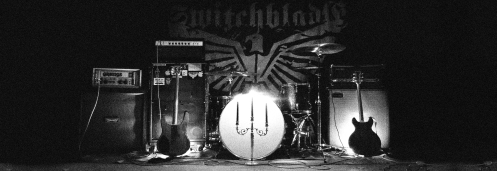
I did an interview for the swedish gods Switchblade  back in 2007 for their “2006″ album. Published at Electric Requiem magazine which is now not available, thought some people might find their words interesting. Words by Tim. Enjoy.

2006coverhigh2

The new album is awesome!

-Thank you very much. We´re pretty happy with it ourselves.

How did it come out so dark and intense?

-Well, the album came out more or less how we intended it to be from the beginning. We had a goal in our minds from the start that we were going to really explore dynamics to the fullest on the album and I think that we succeded pretty well with that.

The fact that you recorded in a special place, played a huge role in that?

-Yes, I think that the location and isolation of the Mission Hall Studio where we recorded played a pretty big role in how the album turned out. We were living in the studio 24 hours/day so we were really focused on the recording but at the same time we felt really relaxed cause the whole atmosphere in the countryside is very calm. It´s not the same pressure as you usually experience in other studios. There is a studio diary on our website with lots of pictures from the recordings.

The big blast in this release is the astonishing sound! With whom are you working with and how much important role plays the equipment for you?

-Yeah, we´ve always been really concern with our productions and equipment and I think that we´re getting closer and closer to what we consider to be the ultimate production/sound for our songs. We recorded the album with Mathias Oldén from LOGH. The Travis Bean aluminum neck guitars we use play a pretty big role in our sound as well I guess.

The third album didn’t have even titles for the tracks but rocked our asses with the first listen! The sound there is getting closer to Steve Albini’s craft. I think you also like Shellac. Comments.

-Yeah, all three of us are great Shellac and Albini production fans. Our third (2003) album was recorded by Carl Wikman at EAR Studios. We´re pretty happy with the way that album turned out as well. We have always been looking for alot of room-ambience in our recordings and have always avoided classical hardcore/metal cliché productions with drums without ambience and such.

Do you play along for many years together and what are the secrets of Switchblade that makes them such a huge band?

-We´ve been playing together for 10 years come this winter. I don´t think that there´s any special secrets that makes us the band we are. And I don´t really think we´re a huge band at all if you mean succes-wise…? We really don´t sell that much records and usually play pretty small shows…

SBfeatEhigh2

Switchblade. Really nice name. What symbolizes for you?

-Well, it doesn´t really have a deeper meaning but it has grown to symbolize alot of things for us personally.

“2006″ has a black metal feeling that is well hidden in the guts of the first track along with super slow riffing connecting to stuff similar such as Khanate. How came the collaboration with ‘E’ of Watain fame? Do you listen to black metal?

-Yeah, we all listen to quite a lot of black metal so it´s not that strange that it shows in our songwriting a little bit. I´ve been friends with “E” for a few years cause he´s always been a customer at the recordstore where I work. We thought that his vocals would fit well with the song and the atmosphere we were aiming for. A lot of people don´t seem to understand that it´s both “E” and Anders singing on that track…

Why did you decide to have lyrics and vocals in the two song new album? Mattias Friberg of LOGH is appearing for second time in your releases. How’s that?

-What do you mean…? We have always had vocals on all our releases even though some people seem to think that we´re an instrumental band. For the last album we just thought that Mattias Friberg´s vocals would be a great addition to the song. We´re good friends and great fans of LOGH so it´s great to get to collaborate with them.

Another thing that makes Switchblade surface is the song structures. Explain us how a Switchblade song is taking form.

-Well, usually someone bring a riff or two to bandpractice and we play it over and over and just try to feel what would fit with those riffs and then try to write new stuff around those riffs. We never bring complete songs to bandpractice. We try to have all three of us contribute to each song.

I know that you play with Travis Bean Guitars. Another synonym with the Albini and co. But in the “Switchblade” (2003) album we can see some Breach atmosphere too. So this combination along with your fantastic song structures creates so huge albums in my opinion! Comments.

–Yeah, Breach is another band we have always had deep respect for and we´ve been lucky to have played a few shows with them. And we recorded 2 albums, a 10″ etc. with Breach mastermind Anders Ekström. We shared practicespace with Breach for a few years. Our bassplayer/singer Anders even use the old Breach basscabinet.

You have already played with great names in the music business. Which do you believe was the biggest moment in the band so far?

-Well, one of the most rewarding experiences was when we got to fly down to Germany for one show with Sunn O)) and Boris.

How do you see your previous releases now that you are really far from them?

-Well, even though there´s a big difference between our older and newer material there is still a red thread running thru all our recordings. We´ve always had the same idea and attitude when making our records. We´re still happy with our older material. Especially the 10″ from 1999.

How convenient is to be a trio music band?

-It´s great. We used to be a four-piece from the beggining but it´s always been the three of us writing all the music.

SwitchNov4high2

Does the artwork play important role for Switchblade? All your illustration so far is more than beautiful and unique.

-Yeah, we feel that the artwork should be a part of the album and an extention of the music. So far we have always handled the artwork ourselves to have complete control and the get it just right.

How do you see nowadays the music network with the addition of the myspace thing? Do you think people and bands have to gain through this tool?

-Absolutely. Myspace is really a great instrument for bands to get discovered and for fans to easily get in touch with their favorite bands.

Future plans.

-We have just started writing new material for a new album. And we have a short tour coming up in December with our friends in KONGH. A band that you´ll hear more about soon for sure…

Close as you wish. Thank you for your time Switchblade. Keep on creating such unique music and atmosphere.

-Thanks alot for your interest in our band and keep your eyes and ears open for our next album.

Switchblade’s new album is gonna be released on 09/09/09 by Trust No One Recordings.

http://www.switchblade.se

http://www.trustnoonerecordings.com

Lunar Miasma – Mala Aria

•June 8, 2009 • Leave a Comment

Lunar Miasma – Mala Aria (Insult Recordings)

Lunar Miasma is the next step. It grew, and through obsessive thought became action, marking the end of the era of Red Needled Sea (Panos is also playing @ Heavensore). From the last live shows a new-age direction became apparent, which has now become focused and not in the least nervous. And that is, I believe, the bet Lunar Miasma win, since “Mala Aria” doesn’t sound like a clumsy hybrid between new age and ambient. The goal now is split in two: psychedelia and atmosphere. The former is accomplished through the use of analog synths, real time effects processing, Theremin and most of all in the fact that “Mala Aria” is recorded live in its entirety. Play it loud enough and you can see the dude hunched over his synths in front of you. But – the right atmosphere can only be achieved through the right sound quality, and the job he’s done in high frequencies is absolutely professional. With their debut release, Lunar Miasma take the necessary risks, and prevail over them, crafting a track in 4 parts, building the right bridges from one to another, spreading the layers in the right way so as to achieve the right kind of flow, exactly like it should be in any concept based work. And I believe that’s the case in ambient music: in the right changes that will lead to the desired atmosphere and will thus create psychedelia, accompanied at the same time by the right sound, so as to go there easily and effortlessly. “Mala Aria” will be released through Insult Recordings, the company of Lunar Miasma, which maintains a high quality level in all its releases. The 100 lucky ones who will grab the disc will taste the satisfaction of a completely experimental recording. Hurry.

Lunar Miasma/Kommpound/Naφθalyn Live!

•June 4, 2009 • Leave a Comment

LUNAR MIASMA/KOMMPOUND/NAΦΘALYN Live!

MIASMAFISA myspace teliki

Sabbath 20 June 2009

@ Kinky Kong, Athens

Cum: 21:00     Entrance:5E

www.myspace.com/lunarmiasma

www.myspace.com/kommpound

www.myspace.com/nafthalyn

Tombs – Winter Hours

•March 17, 2009 • Leave a Comment

Tombs – Winter Hours (Relapse)

folder-94

Mike Hill is one of the obscure, invisible players in musical underground; he is also the guy responsible for the creation of Anodyne, who released exclusively great records, and Versoma, who didn’t fare quite so well. Hill continues as producer and founder of Black Box Productions, only to create Tombs a little later. This is their second release in Relapse, and they have so outdistanced their previous self that it took me a while to realize that it’s Hill’s band we’re talking about.

I confess I was taken aback with the direction the trio has taken, in the beginning. Their sound is thicker, the space the instruments claim in the final mix is different, and the general aural quality isn’t high-key but jarring. Of course, the bigger difference with their previous release is the change of style. That is, for example, Hill as the vocalist still uses shouts but now they’re more sentimental, and that is communicated in the whole of each song. Moreover, the changes he tries in his singing are very functional and serve the rest of the composition exactly as they should.

Now, more than ever, black metal touches make their appearance without even bothering to be disguised – and these are these touches that make “Winter Hours” a great record. The speed plays a part in that, and if Tombs wanted to claim new levels of harshness, they surely achieved them, because despite the changes of style (you can even find some shoegaze in there) the product is fundamentaly metal.

It pleased me to see that a guy like Mike Hill, who used to play cracked-up hardcore (e.g. Anodyne) is now busy with more extreme ends BUT in the same nuts state-of-mind. It looks like a challenge, and as far as I’m concerned he emerges a definite winner. And I’m pleased even more because a challenge like that produces great results, like “Winter Hours”. There are many times that, when I listen to it, I’m thinking that this is what the shoegaze scene would like to be, or the way that Jesu should be playing. What can you do though, Tombs play on a field of their own. Amen.

KEN Mode – Reprisal

•March 10, 2009 • 1 Comment

KEN Mode – Reprisal (Escape Artist Records)

902627

I can’t understand what’s gotten into these Canadian dudes, KEN Mode, while they were creating this album. Neither can I get how the hell we missed a release that’s screaming 2006.

The last I’d heard of them was when they’d released their debut “Mongrel” through Escape Artist. As it seems, now they’ve decided to produce what is their best and most satisfying effort yet. There aren’t many other ways to describe “Reprisal”, really. Should I talk about dexterity? Ambition? Groove? Masterful compositions? We may be facing one of the most powerful efforts Canada has ever produced. No, this isn’t simply a hardcore album, and trying to label “Reprisal” is irrelevant. What’s relevant is that when this album is playing I’m high on this energy that only bands without limits and narrow-mindedness can produce.

It’s literally awesome that each band member plays his own part distinctly and to the point, not to produce a ‘jam’, but mainly to produce a quality composition. And these guys sure know how to play. There isn’t any point in trying to compare them with other bands because nobody else plays like that, really. Simple as that.

The area that KEN Mode excels is their deep understanding of noise rock, that makes them able to transform their hatchlings into monsters. The guitar playing is original and innovative but not overbearing, so as to leave enough space to the rhythm part, which is another awe-inspiring element in their music. This may sound like too much praise, but it isn’t. We’re talking about an album that doesn’t leave much space for doubts, even in the first hearing. Opener “The Hammer Party” makes it clear that these guys mean business. This isn’t another ‘tech’ band. KEN Mode may have a hardcore background, but they play Music. The aforementioned space that guitarist/vocalist Jesse Mathewson leaves surrounded but not filled, gives the drummer, his brother Shane, the chance to create Dionysian drum parts, with unrivalled skill and aesthetic. This guy’s style is one of the best and most functional I’ve ever heard. It reminds me of the drum parts in Mastodon’s “Remission”, but in “Reprisal”, mostly due to musical differences, the drum parts have a different kind of potential. And that’s the reason Shane is playing God. His innovation literally leaves me speechless. And the best thing about his drum sound is that it’s crisp and clear, without any use of triggers. Real, sharp, wooden drums. An equally functional bass complements the drums and provides Shane with the base in which he builds his mostly improv playing.

Each track is unique and distinct; “Seul” is one of the best, along with “Lethe”, a real lesson of technical dexterity and imagination. The production is another lesson for every musician and producer out there: clear and warm, encompassing all the instruments, stereophonic and in-your-face.

In “Reprisal” you’ll hear Today Is The Day or even The Jesus Lizard shouts. You’ll hear one of the best-rehearsed rock trios of our age. Unrivalled imagination and a sense of strength and purpose. Any way I describe it, there will always be something missing. The point is, KEN Mode should get the recognition they deserve one day, because if we want to talk about transcendence, “Reprisal” should be definitely included.

Heavensore – Asmodai

•January 20, 2009 • Leave a Comment

Heavensore – Asmodai (Utech Records)

Here is a new band that doesn’t feel at all afraid to represent the doom/sludge sound of Greece, crushing the borders of heaviness and building the foundations for something unique and solid. The guys were practicing this shit for around two years, patient and focused to achieve their very high standards. It’s really important to know that this is not a band that decided to base its sound on the probably lax results of its first rehearsals, but constantly strived for more. It’s something well thought, well executed and aurally destroying.

First of all this is a record that demands patience from the listener; exactly the same patience these players had in order to enrich this work. “Asmodai” consists of three songs only, the two of them lasting about 20 minutes each, so it’s a tough tune. The record begins with a free jazz song having a lot of noise in the background not sharp but hollow, concluding somehow into the first riff of the following track. I mentioned above free jazz as an element and I have to say that this specific element can be heard in the other songs too. Heavensore’s sound is megaton-heavy and suffocating, exploring all the paths from the doom and the sludge scene, without being predictable. “Tabula Smaragdina” is a terrifying monster of a song, where heavy riffs and vocals collide. It’s like you have Grief playing on the first floor, Albert Ayler with his band on the second one  and Family Battle Snake on the third. The case is that this conglomerate is truly well done. The key to this is that, Heavensore is really aware of this thing called dynamics in sound. All things are stretched on their canvas with a crucial, risky and controversial manner that makes the band a winner. The bass and the drums build what is about to come, along with the guitar and the eerie vocals. It’s crucial also to notice,  while listening to “Tabula Smaragdina”, that the doom part is taken over by a free jazz part, only to come back later with the band destroying any possibility of a mere has-been improvisation group that has nothing left to offer, melting these ideas over our heads with a serious sludge riff, in order to remind us its purpose: fear and darkness. It might sound a bit childish but not that at all, dudes.

“Asmodeus” has a fine intro with some voices in equilibrium with the drone riff that follows. Suprisingly the vocals are clean, making the impression that here we have something different; and it is. Burning Witch would be proud of this. It’s scary and you can’t predict what is about to come. But hey, isn’t this the beauty of this music? I believe it is. I like to listen to something that I can’t predict; it gives me the reason to continue paying attention. Heavensore knows how to trigger this. Another aspect I should mention here is the sound engineering of this record. It’s rich and warm, giving the right space to make audible every instrument, every single vocal. It’s important for one record to have the right sound ‘cause this way you can easily listen to the whole record without melting your ears from unwanted frequencies and shit. It helps the material to breathe. This is something that happens in the song “Asmodeus”, because when the song is over you really can’t understand how all that emerged so fast and believe me, the song is about 25 minutes long!

If you have already created a picture in your head about this record reading these words, I tell you that it’s completely wrong. “Asmodai” is a hell of a debut but it’s difficult. It’s also dark enough, creating something really bizarre in your head in the end, and Stephen Kasner with his ultra terrifying artwork multiplies this rotten feeling. “Asmodai” doesn’t demand just your patience; it demands time and will to completely grasp its whole idea and picture. Time that needed Utech Records, for example, to understand that this is a record dedicated for specific listeners (and thus limited to 750 copies). Will to overcome the difficulties and focus for something true. We wait for the second coming. It’s just a matter of time.

Cursed – III – Architects of Troubled Sleep

•January 20, 2009 • Leave a Comment

Cursed – III – Architects of Troubled Sleep (Goodfellow Records)

Whatever they choose to do, Canadian hardcore punks Cursed will always be what we say, “true”. They never follow rules and trends about how to set up and compose their tracks, there are no “must-do’s” about how everything should be promoted, like in other bands. Cursed play the darkest hardcore music of the noughties. It’s that simple. What’s most amazing about them is that while we always look forward to their next move, they keep infusing their music with more and more of that rotten feeling, making us cringe in surprise and lusciously ask for more.

After last year’s EP “Blackout at Sunrise”, Cursed blacken their music even more. We’re not faced a single bit. Especially when the familiar intro is followed by a track characterized by blastbeats, corollary of His Hero is Gone, or even The Swarm days. This record is as hardcore as it gets with all the well-known, whopping Cursed grooves, delivered the way they know best, completely unlike how the rest of the hardcore scene does it; music that creeps up on you so that the lyrics find ground for full expression of the band’s distinctiveness. Guitars tuned low, played nervously in order to produce a tearing sound; riffs that sound as if they’re coming from the depths of a swamp, overweight and imposing. Chris Colohan’s amazing voice, more vibrant and expressive than ever, enriches that wonderful rotten feeling, adopted by Cursed. From an intense “Night Terrors” to “Unnecessary Person”, you can hear how the vocals shift together with the band’s mood. However they choose to play, Cursed are completely in-tune with what they’re doing. They refuse to play whatever’s out there just to make a diverse record.

Cursed minister to the needs of their aesthetics; dark, sly, and black, dogmatically nihilistic lyrics and a horror artwork. Furious speed with a hardcore substratum and injections of doom elements. In “Gutters”, the album’s crescendo, similarly in “III”, they unravel a truly fabulous melody on a canvas composed of feelings and images, convincing us for a moment that they’re something entirely different than the Cursed we know. But they’re not. Everything about this record is subjective, and thoroughly thought through. Have a look at the illustration, Baizley’s work on the cover, the production, and the lyrics. Cursed have their own tale to tell. And we’re really happy about that.